


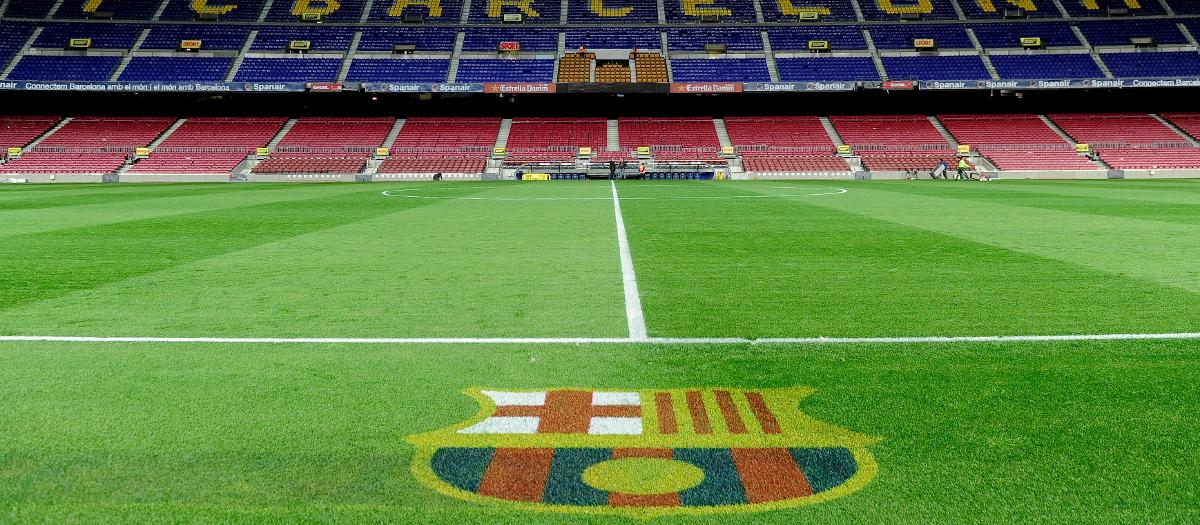
Un estadi de màxima categoria
El Spotify Camp Nou acull els partits de futbol del primer equip del Club des del setembre del 1957.
El nou estadi del Barça va substituir l’antic camp de Les Corts, que tot i que tenia una capacitat per a 48.000 espectadors (després de diverses ampliacions) va quedar petit amb la gran expansió de l’afició blaugrana experimentada a finals de la dècada dels quaranta.
Els arquitectes Francesc Mitjans Miró i Josep Soteras Mauri (amb la col·laboració de Lorenzo García Barbón) van dissenyar l’Estadi, que es va construir entre el 1955 i el 1957 a còpia de formigó i ferro. L’obra va costar uns 288 milions de pessetes i va comportar l’endeutament del Club durant uns quants anys.
Tot i que inicialment no tenia nom, una enquesta entre els socis celebrada al setembre del 1965 va establir com a nom oficial Estadio del CF Barcelona. De tota manera, popularment des del 1957 es va batejar com a Camp Nou, ja que l'estadi substituïa l'antic camp de Les Corts, el camp vell. A l’abril del 2001 es va oficialitzar el nom de Camp Nou després d'una consulta popular, feta per correu, entre els socis de l'Entitat. De les 29.102 respostes que es van remetre al Club, un total de 19.861 (el 68.25%) van apostar per "Camp Nou" en comptes de "Estadi del FC Barcelona".
L'Estadi té una alçada màxima de 49,67 metres i una superfície de 58.760 metres quadrats (260 metres de longitud i 226 d’amplada). Seguint la normativa de la UEFA, el terreny de joc fa 105 m x 68 m.
Amb una capacitat de 99.354 persones, actualment és l’estadi més gran de tot Europa. La capacitat de l'Estadi, però, ha patit diversos canvis, a causa de les diferents ampliacions que s'hi han fet. Inicialment, el 1957 hi cabien 99.053 espectadors, xifra que va arribar fins als 115.000 l'any 1982, coincidint amb la celebració del Mundial de futbol. Posteriorment, en aplicació de la normativa que obligava a eliminar les localitats dempeus, l'aforament es va situar novament, a finals dels anys 90, a la ratlla dels 99.000 espectadors.
Durant la temporada 1998/99, la UEFA va reconèixer els serveis i la funcionalitat del Camp Nou i el va classificar com a estadi Cinc Estrelles. L'any 2010, amb el nou reglament de la UEFA, aquesta categoria es va substituir per la de Categoria 4, que correspon als estadis que compleixen les màximes exigències en prestacions, serveis i aforament, com és el cas de l'Estadi del FC Barcelona.
Entre totes les instal·lacions i dependències que hi ha a l'interior de l’Estadi destaquen una petita capella al costat dels vestidors, les llotges, la sala VIP, la sala de premsa, diversos platós de televisió, les cabines de premsa, les oficines de serveis tècnics, el Centre de Medicina Esportiva, la Unitat de Control Operatiu (UCO), el local de l’Agrupació Barça Jugadors, el Museu del FC Barcelona i dependències de diversos departaments del Club.